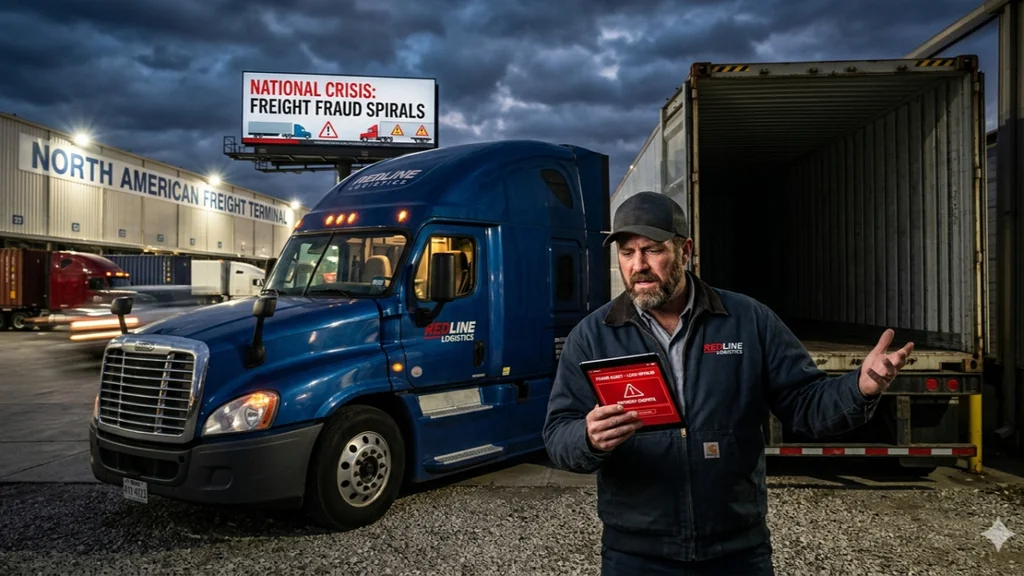
Over the past several weeks, something shifted in transportation.
Freight fraud stopped being an inside conversation.
It went public — and it went loud.
From Industry Talk to National Spotlight
At many major freight and logistics conferences this spring, fraud wasn't a breakout session topic.
It was front and center on the main stage.
Different audiences. Different cities. Same concern.
The industry is no longer treating this as background noise. It's becoming one of the defining issues of the moment — and the conversations happening in those rooms reflect that.
Then the FBI Made It Official
On April 30, 2026, the FBI issued a formal Public Service Announcement directed at the U.S. transportation and logistics sector.
This wasn't a think piece or an industry report.
This was a federal agency going on record.
The FBI warned the public of cyber threat actors using sophisticated, cyber-enabled tactics to impersonate legitimate businesses — hijacking freight, stealing high-value shipments, and rerouting deliveries in what they described as a surge of strategic cargo theft. FBI
The numbers in that PSA should stop anyone in this industry cold:
- Estimated cargo theft losses in the U.S. and Canada reached nearly $725 million in 2025 — a 60% increase over the prior year
- Confirmed cargo theft incidents increased 18%, and the average value per theft rose 36% to $273,990, driven by more selective targeting of high-value loads
When the FBI publishes numbers like that, it means the activity is widespread, the financial damage is significant, and organized groups are behind it.
This is not small-time theft. This is coordinated, strategic crime.
How It Actually Works
The attack chain has been active since at least 2024. Attackers compromise freight broker or carrier accounts through phishing sites that install remote monitoring software, gaining persistent, undetected access. They then post fraudulent freight listings on load boards, tricking legitimate carriers into downloading malicious files — and accept real shipments under stolen carrier identities.
Threat actors also alter the compromised carrier's registration details with the FMCSA and update insurance records — meaning legitimate companies often don't discover they've been compromised until brokers report missing shipments booked in their name.
Before the truck ever moves, the damage is already done.
Why Transportation Is the Target
The industry has become a prime target for one reason:
It moves fast — and it runs on trust.
- Loads are booked quickly
- Communication is constant
- Verification is often manual
- Email is the backbone of operations
Attackers have figured this out. And they are exploiting it systematically.
The Industry Is at a Turning Point
The conference conversations, the media coverage, and now a federal PSA — taken together, they tell you something important:
Cybersecurity is no longer optional in freight.
It is not secondary to operations.
It is part of operations.
The industry has historically treated cyber risk as someone else's problem — an IT issue, a tech company issue. That framing no longer holds.
The Questions Every Operator Needs to Ask Right Now
The question is no longer "Could this happen to us?"
The question is "Where are we exposed?"
- Are we verifying carrier identities through a secondary channel — not just email?
- Do we have MFA enabled on load board access and shipment systems?
- Would we know if our FMCSA registration had been altered?
- Would we detect fraud before the load — and the money — are gone?
The FBI specifically urged companies to implement multi-channel verification for all shipment requests, validate unexpected communications through a two-factor process, and maintain thorough documentation of all drivers, vehicles, and carrier credentials. CDLLife
These aren't complex steps. But they require intent — and most operations aren't there yet.
Final Thought
Freight fraud has officially moved beyond an industry issue.
The FBI has made that clear.
The companies that treat this as "just another risk" will keep getting caught off guard — after the load is gone, after the money moves, after the damage is done.
The ones that take it seriously now will be the ones that stay operational, protected, and trusted.
Question for You:
The FBI just told the entire country that your industry is under active attack.
Does your operation have the controls in place to catch it — before it costs you?
Lets find out together Contact us here and The Cyber Freight Room for a Risk Assessment
The Cyber Freight Room. Where freight meets cybersecurity/