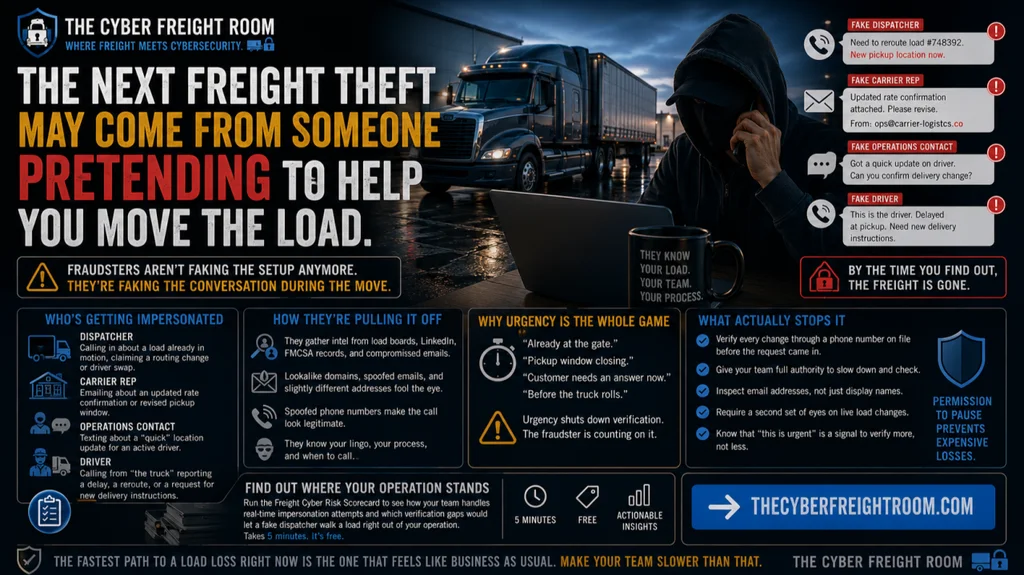
The next freight theft may come from someone pretending to help you move the load.
That's not theoretical. It's already happening. Right now, inside live loads, with fraudsters working alongside your team — sometimes for hours, sometimes for days — before anyone realizes the person they've been talking to isn't who they said they were.
The industry has spent the last two years getting better at vetting carriers up front. That's progress. But the bad actors moved. They're not faking the setup anymore. They're faking the conversation during the move.
Who's Getting Impersonated
The targets aren't random. The fraudsters are picking the roles inside your operation where trust gets extended fast and questions slow things down:
The dispatcher — calling in about a load already in motion, claiming a routing change or a driver swap.
The carrier rep — emailing about an updated rate confirmation or revised pickup window for a load that's hours from departure.
The operations contact — texting your team about a "quick" location update for an active driver.
The driver — calling in from "the truck" reporting a delay, a reroute, or a request for new delivery instructions.
In every one of those scenarios, the person on the other end isn't who they say they are. The voice is unfamiliar, but the load number checks out. The email signature looks right, but the domain has one letter off. The story makes sense because they already know enough about your operation to build one.
How They're Pulling It Off
This isn't sophisticated hacking. It's social engineering wearing freight-industry clothes.
They gather information from public load boards, LinkedIn profiles, FMCSA records, and previous email threads they've compromised. They learn how your dispatchers talk. They know what your rate confirmations look like. They study the cadence of your operation so they can call at the right moment and sound like they belong.
The email spoofing is built around lookalike domains — a .com that became .co, an extra letter dropped into the company name, and a reply that's coming from a slightly different address than the one that started the thread. Most operators don't catch it because they're not looking at the actual address, just the display name.
The phone impersonation is even simpler. They call from a spoofed number. The caller ID matches a number your team has seen before. The conversation moves fast. By the time anyone checks the number against the carrier's record, the load is already redirected.
Why Urgency Is the Whole Game
Here's the part every freight operator needs to internalize. Every one of these scams is built around urgency.
The driver is "already at the gate." The pickup window is "closing in 30 minutes." The customer is "asking for an answer right now." The change has to happen "before the truck rolls."
Urgency is the attacker's weapon because urgency is what shuts down the verification step. When your dispatcher feels rushed, they don't call back to confirm. When your rep feels pressure, they don't push back on a last-minute change. When the load is moving, asking too many questions feels like the wrong move.
That's exactly what the fraudster is counting on. Slow your team down on a normal load, and you're being thorough. Slow your team down on a rushed one, and they think you're being difficult. The bad actors know the second one is harder.
What Actually Stops It
A few operational moves that work:
- Every routing change, payment update, or rerouted pickup gets verified through a phone number on file before the change request came in — not the number provided in the email or by the caller
- Your team has clear authority to slow down a rushed request and check, regardless of who's pushing them
- Email addresses get inspected, not just display names
- Live load changes get a second set of eyes before anyone acts on them
- Your dispatchers know that "this is urgent" is a signal to verify more, not less
None of that requires new technology. It requires giving your team permission to pause.
The Real Issue
The next freight loss isn't going to look like a break-in. It's going to look like a normal phone call. A normal email. A normal driver. A normal dispatcher.
The only difference is the person on the other end isn't who they said they were — and by the time you find out, the freight is gone.
Find Out Where Your Operation Stands
Run the Freight Cyber Risk Scorecard to see how your team handles real-time impersonation attempts and which verification gaps would let a fake dispatcher walk a load right out of your operation. Takes 5 minutes. It's free.
The fastest path to a load loss right now is the one that feels like business as usual. Make your team slower than that.
The Cyber Freight Room — Where freight meets cybersecurity. 🚛🔐